
Look beyond today's clear space
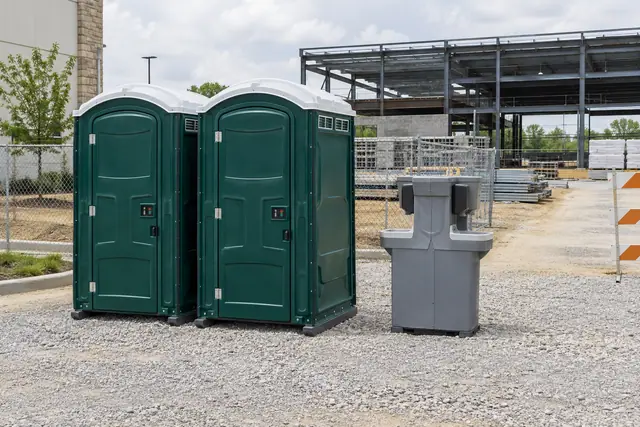
Mark expected material stacks, fencing, equipment movement and pedestrian routes. Ask the supervisor whether the proposed restroom area will remain outside those operations as work progresses.
Keep the user approach separate from active unloading. Describe slopes, surface conditions and overhead or entrance obstacles to the provider instead of guessing what the delivery vehicle can negotiate.
Protect the service route from gradual obstruction
Decide who will keep gates and the working approach clear on service days. A unit can remain accessible to workers while becoming impossible to service because pallets or parked vehicles block the provider.
If the work plan changes, discuss repositioning with the provider first. Do not drag or lift rental equipment as an improvised site adjustment.
Recheck after a site-layout change
Tell new supervisors where the equipment and service approach must remain. Include the position in the next layout discussion when fencing, entrances or the work front changes. Equipment placement does not replace the employer's own applicable safety and sanitation responsibilities.
Questions before you book
Can workers move the unit to create more storage space?
Ask the provider to review and arrange any move. A new position may change stability, user access and servicing needs.